

If you’ve ever stood in a supermarket aisle wondering what “fair trade”, “Fairtrade”, “direct trade”, or “ethically sourced” actually mean… you’re not alone. Ethical claims have exploded across packaging in Australia and New Zealand — and not all of them are backed by real action.
As we head into a busy shopping season, here’s a quick, clear guide to help you tell the difference.
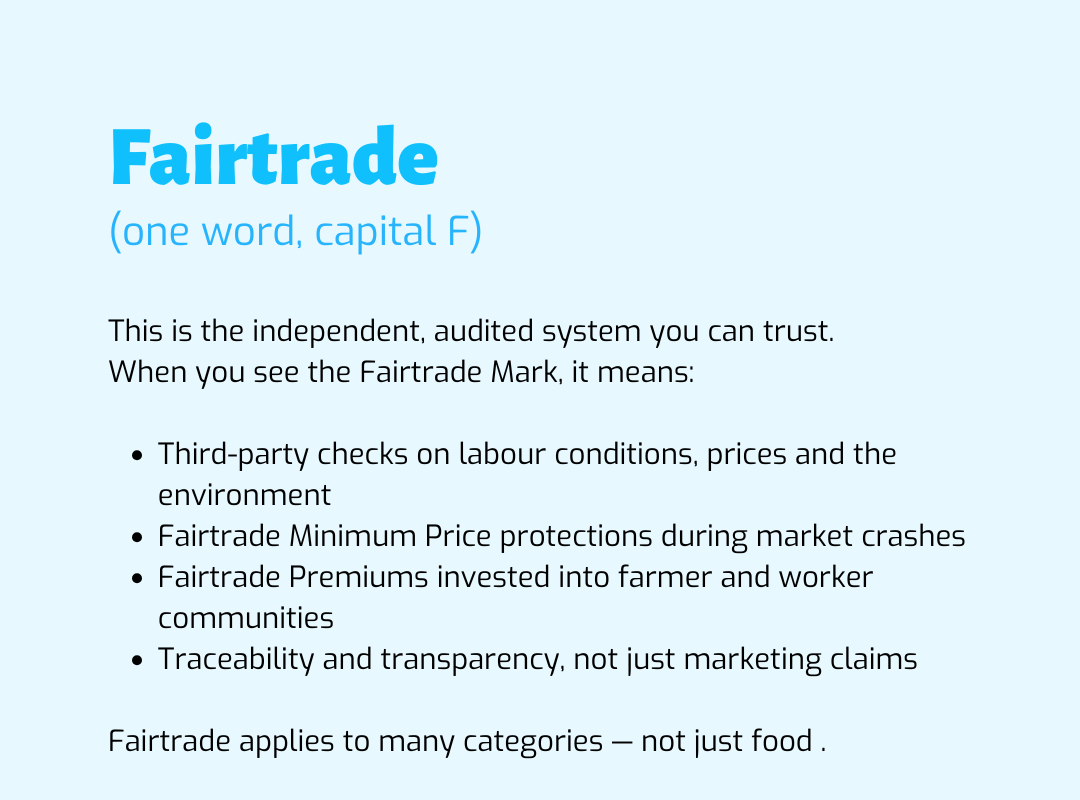
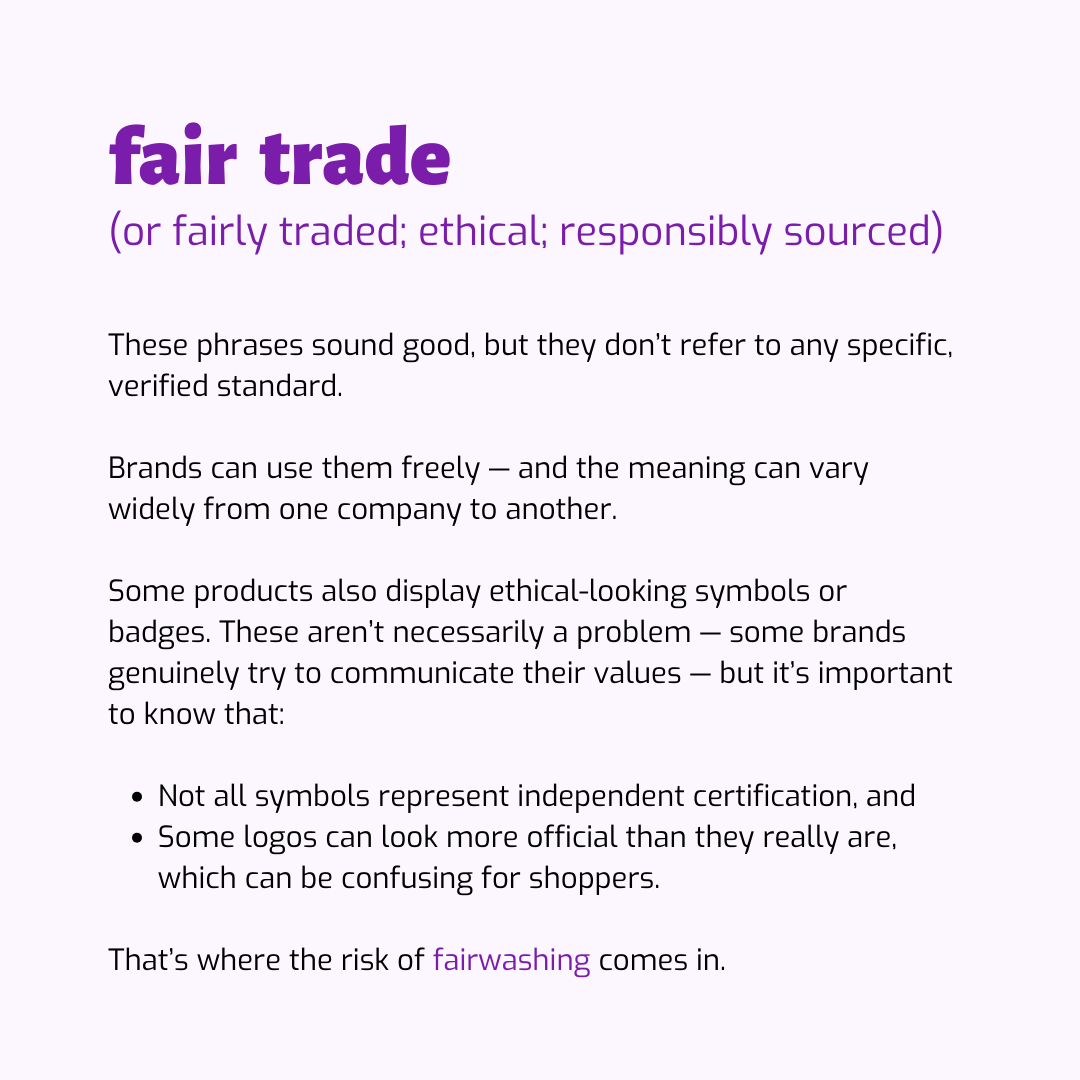
“Fairwashing is a term often used when brands make ethical-sounding claims without clear, independent evidence to back them up. So if you don’t see a recognised certification mark or clear evidence behind the claim, it’s worth taking a second look.“
Direct trade is often marketed as “cutting out the middleman” and building closer links with producers. And yes — some businesses genuinely do that. But in practice, direct trade varies hugely, because there is no shared definition and no external oversight.
What this can mean:
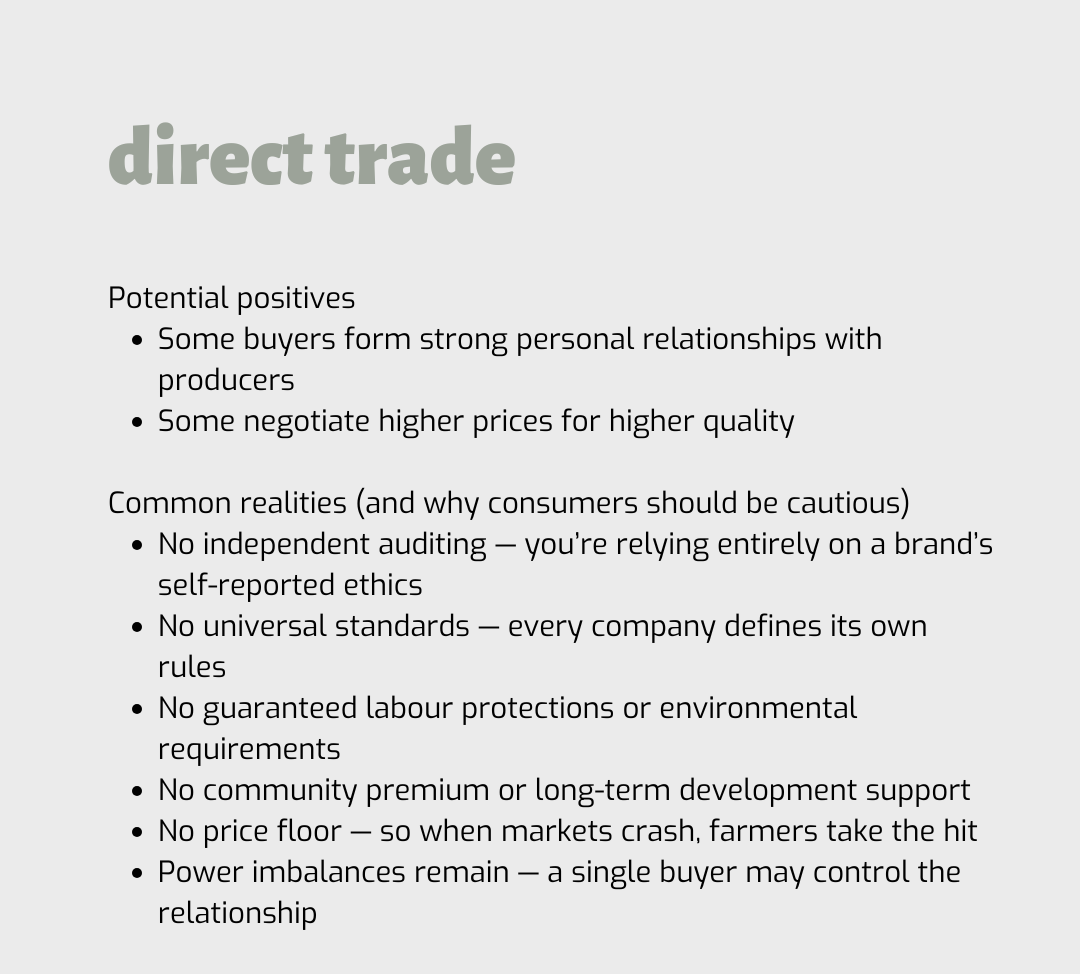
Direct trade can work well for some producers, but it can also leave them vulnerable — especially when buyers change priorities, shift volumes, or pursue cheaper sourcing.
Direct trade stories can sound appealing, but without independent verification, they’re impossible to evaluate from the outside.
Importantly, direct trade and Fairtrade are not mutually exclusive. Producer organisations can participate in Fairtrade-certified supply chains while maintaining close relationships with buyers, combining the benefits of verified standards, community premiums, and direct collaboration.
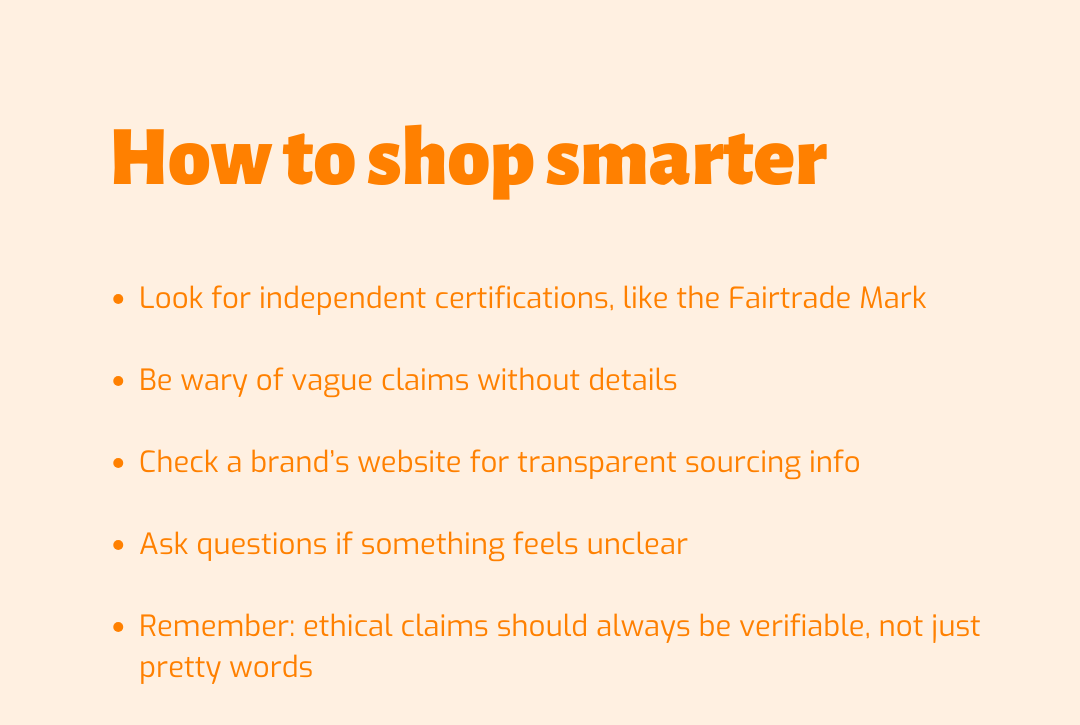
Ethical shopping shouldn’t feel like detective work.
If a product claims to be “fair”, there should be proof — not just marketing language.
Fairtrade certification gives you that clarity. Everything else? Read carefully, ask questions, and watch out for fairwashing.